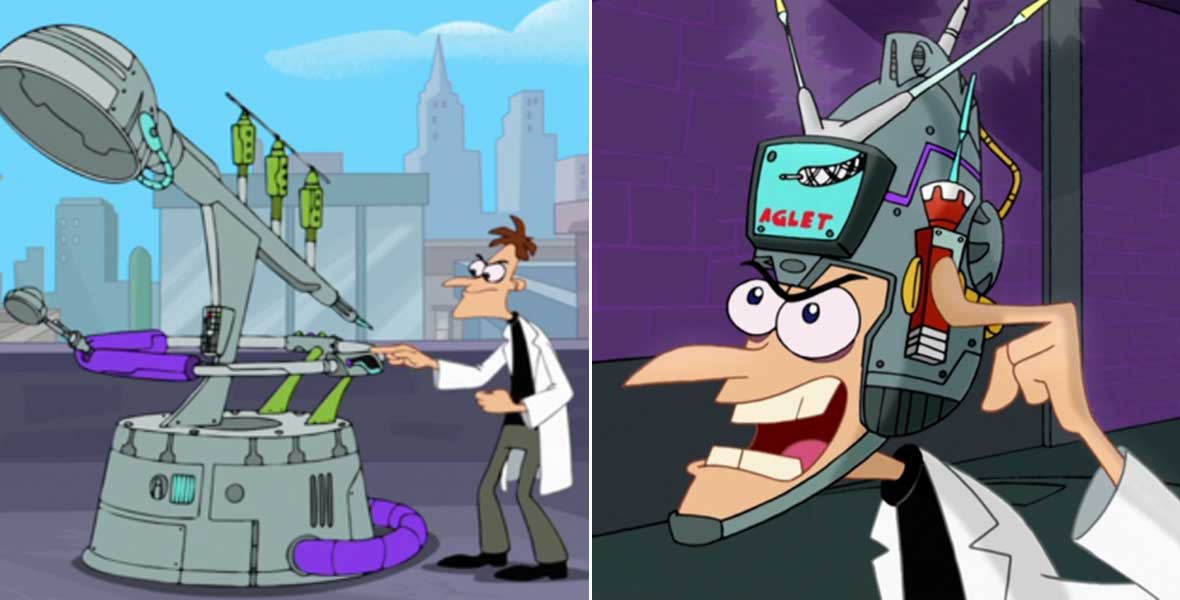
Unpacking the Genius and Absurdity of Dr. Doofenshmirtz's Inators
Dr. Heinz Doofenshmirtz. The name alone conjures images of a cartoonishly evil scientist, maniacally cackling from atop Doofenshmirtz Evil Incorporated. Yet, beneath the veneer of diabolical plots and a perpetually exasperated platypus nemesis lies a character far more complex, a bumbling genius whose inventions, known affectionately as his "Inators," are as hilarious as they are often surprisingly sophisticated. These infamous devices, each bearing the distinctive "-inator" suffix, are the heart and soul of his relentless (and usually thwarted) quest to conquer the Tri-State Area. Join us as we delve into the world of Doofenshmirtz, exploring the mad science, the personal vendettas, and the sheer comedic brilliance behind his most iconic creations.
The Man Behind the Machine: Who is Dr. Doofenshmirtz?
Before we dissect the inner workings of his contraptions, it's crucial to understand the eccentric mind that conceived them. Dr. Heinz Doofenshmirtz, often shortened to "Doof" or "Dr. D," is the brainchild of Dan Povenmire and Jeff "Swampy" Marsh, voiced by Povenmire himself. Hailing from the fictional Eastern European nation of Drusselstein, Doof embodies the quintessential evil scientist archetype, complete with a distinctive German accent and an unwavering ambition to rule the Tri-State Area. His primary motivation? To spite his more successful (and often oblivious) brother, Roger, who happens to be the mayor.
What makes Doofenshmirtz so endearing and enduringly popular is the fascinating juxtaposition of his archetypal megalomania with an incredibly affable, almost pathetic, personality. He's not purely evil; he's often simply misunderstood, driven by deep-seated insecurities stemming from a truly bizarre and neglectful childhood in Gimmelshtump, Drusselstein. His backstories, often recounted in lengthy, dramatic monologues to his nemesis, Perry the Platypus, are legendary – from being forced to be a lawn gnome to his parents simply not showing up for his own birth. These deeply personal, often absurd, traumas are invariably the catalyst for his latest scheme and the design of his particular
inator. He exhibits acts of "cartoonish" physical violence towards Perry, but it's rarely truly malicious, more a part of their elaborate, almost ritualistic, cat-and-mouse game. This unique blend of villainy and vulnerability makes him one of animation's most beloved antagonists.
The Anatomy of an Inator: From Conception to (Near) Conquest
Every Doofenshmirtz scheme begins with an
inator. These aren't just random inventions; they are meticulously planned (albeit flawed) machines designed to achieve a very specific, often petty, goal related to Doof's latest grievance or childhood trauma. The naming convention is simple: a descriptive word followed by "-inator." This allows for an endless array of devices, each tailored to the peculiar problem Doof is trying to solve.
The design philosophy behind an
inator is a marvel of mad science. They often incorporate wildly advanced technology – lasers, force fields, molecular transfigurations – applied to the most mundane or absurd objectives. While Doof is undoubtedly a genius, his execution often leaves much to be desired, or his plans are simply too convoluted for their own good. A typical episode sees the
inator achieving a single, often successful, shot or activation, usually leading to some chaotic but harmless outcome for Phineas and Ferb's concurrent project, before being swiftly dismantled, destroyed, or inadvertently repurposed by Perry the Platypus.
**Tips for Aspiring Evil Scientists (courtesy of Dr. D):**
* **Embrace Your Backstory:** Never underestimate the power of a compelling (and overly long) monologue detailing your childhood woes. It justifies *everything*.
* **The Suffix is Key:** Always, *always* add "-inator" to your invention's name. It adds a certain je ne sais quoi to your evil branding.
* **Simplicity is Overrated:** Why build a simple device when you can construct a ridiculously complex
inator to achieve a minor inconvenience?
* **Never Give Up:** Even if your
inator is destroyed, there's always tomorrow to build a new one. Plus, the insurance deductible is often surprisingly low for an evil corporation.
A Gallery of Genius (and Giggles): Iconic Inators Explored
Over four seasons of *Phineas and Ferb* and even in *Milo Murphy's Law* and *Phineas and Ferb The Movie: Candace Against the Universe*, Doofenshmirtz has graced us with a plethora of these wondrous, wacky machines. Let's revisit some of his most memorable:
The Bread-Inator (“Crack That Whip,” Season 1, Episode 18)
At first glance, an
inator designed to turn objects into whole-grain bread seems relatively benign. However, Doofenshmirtz's end goal for the Bread-Inator was pure, unadulterated petty vengeance. His target? The statue of President Rutherford B. Hayes, whose magnificent beard, immortalized beside Doofenshmirtz Evil Incorporated, mocked Doof daily. Unable to grow such splendid facial hair himself, Doof planned to transform the statue into bread and unleash a flock of hungry magpies to devour it. The brilliance here lies in the sheer *specificity* and *pettiness* of the evil. It wasn't about world domination, but about beard envy. Fortunately, the Tri-State Area was saved not by Perry's usual heroics, but by Doof's debilitating headache, rendering him too exhausted to fully implement his "hair"-brained plot. The lesson? Even evil masterminds need their naps.
The Media-Erase-Inator (“Voyage to the Bottom of Buford,” Season 1, Episode 19)
In a rare moment of accidental heroism, Doofenshmirtz was caught on tape rescuing a kitten. This unexpected act of kindness threatened his carefully cultivated "evil" image. Enter the Media-Erase-Inator. This device was conceived purely to erase the evidence of his errant do-goodery from all local news channels and public consciousness. Doofenshmirtz is fiercely protective of his villainous reputation, even refusing to return the "welcome to the good side" gifts he received. This
inator highlights a core aspect of his character: his commitment to perceived evil, even if it means erasing a genuinely good deed. It's a comedic commentary on identity and the lengths one will go to maintain a persona, even if that persona is "evil scientist."
The Delete From My Mind-Inator (“Tip of the Day,” Season 2, Episode 2)
This
inator speaks to a universal human desire. After an embarrassing viral video of Doofenshmirtz hit the internet, he created this device to delete the memory of the incident from the minds of everyone who viewed it. The relatability here is off the charts. Who hasn't wished for a personal "Delete From My Mind-Inator" after an awkward social gaffe? This particular
inator showcases Doof's vulnerability and his very human reaction to humiliation, proving that even a cartoonishly evil scientist can feel the sting of public embarrassment. It’s a powerful tool, not for conquering the Tri-State Area, but for protecting his fragile ego.
The Enduring Appeal of the Inator
The brilliance of Dr. Doofenshmirtz and his collection of Inators lies in their consistent ability to entertain and surprise. They are a testament to creative writing that blends slapstick humor with genuinely clever concepts, all while developing a character who is both ridiculously evil and profoundly sympathetic. Each
inator is a window into Doof's psyche, revealing another layer of his bizarre past, his petty grievances, or his surprisingly relatable insecurities.
From turning statues into bread to erasing embarrassing memories, Doofenshmirtz's
inators are more than just plot devices; they are an integral part of his identity. They embody the paradox of his character: a brilliant mind often wasted on trivial pursuits, a man who yearns for dominance but whose deepest desires are simply acceptance and validation. As viewers, we don't just laugh at his failures; we root for him, hoping that one day, just one day, an
inator will finally achieve its intended, albeit misguided, purpose. The world of *Phineas and Ferb* simply wouldn't be the same without the constant threat (and consistent failure) of another maniacal, yet silly,
inator.